Difficulty: medium · Hands-on: 30 min · Waiting: 3 h
Almost every gastronomy has one dish similar to what Spaniards call “Croquetas”. There are two fundamental things which are key to get this recipe right; The flavour of the bechamel and how to fry the croquetas. Once you execute those things correctly, almost any ingredient variation or shape will do.
In a nutshell, a croqueta is a flavoured bechamel which gets fried after covering it in breadcrumbs.
The bechamel
The bechamel will hold together any ingredient/flavour you might want to make croquetas of. One of the first decisions we'll need to take to create our croqueta is the ratio of ingredient/bechamel. I’ve tried lots of croquetas which having an intense flavour didn’t have any solid within them, and some others which were about 90% ingredient and just a small amount of bechamel holding it together. Do not stress much about getting it right the first time; it is hard to make a bad croqueta.
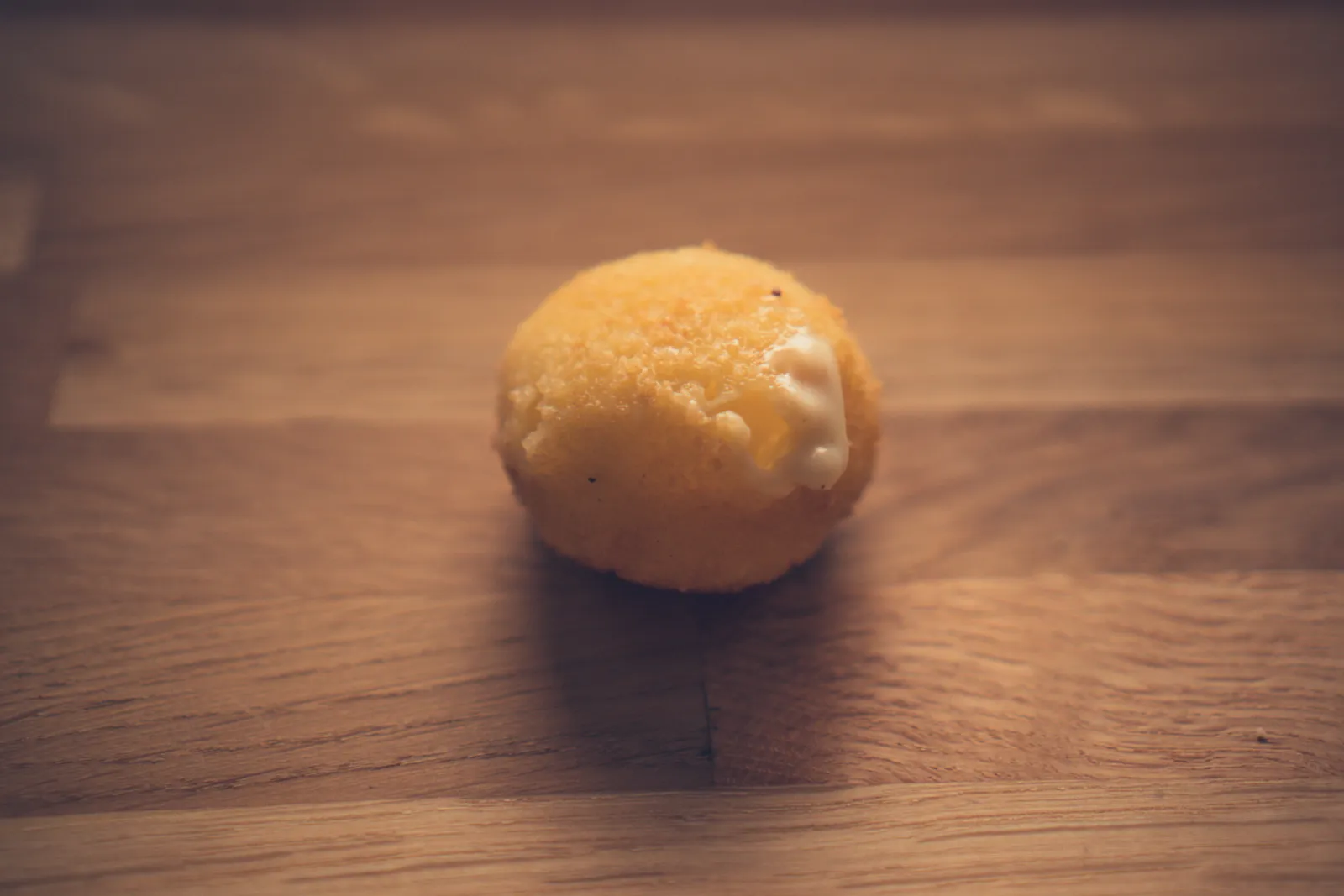
Another important factor about the bechamel is its texture once it gets fried. You can make a really roux heavy bechamel which will produce a quite solid croqueta, or you could go to the other extreme and make the bechamel quite thin so once fried the interior of the croqueta will be almost liquid. This texture is as amazing as challenging, as it will require you to be gentle when forming the croquetas as well as quite careful and precise when frying them.
Cheese croqueta: almost liquid and no visible ingredients; Brisket croqueta: creamy and full on ingredients.
Finally the taste. You can make croquetas out of any food, but remember that one of the key aspects cooking them is that the flavour needs to be well defined. It is quite common to infuse the milk with some of the ingredients so that the bechamel will have a reminiscence of that taste. For example, if you are cooking ham croquetas, infusing the milk with a ham bone will skyrocket the final flavour. You can use spices and herbs or even replace a small proportion of the milk with a strong stock.
Shape
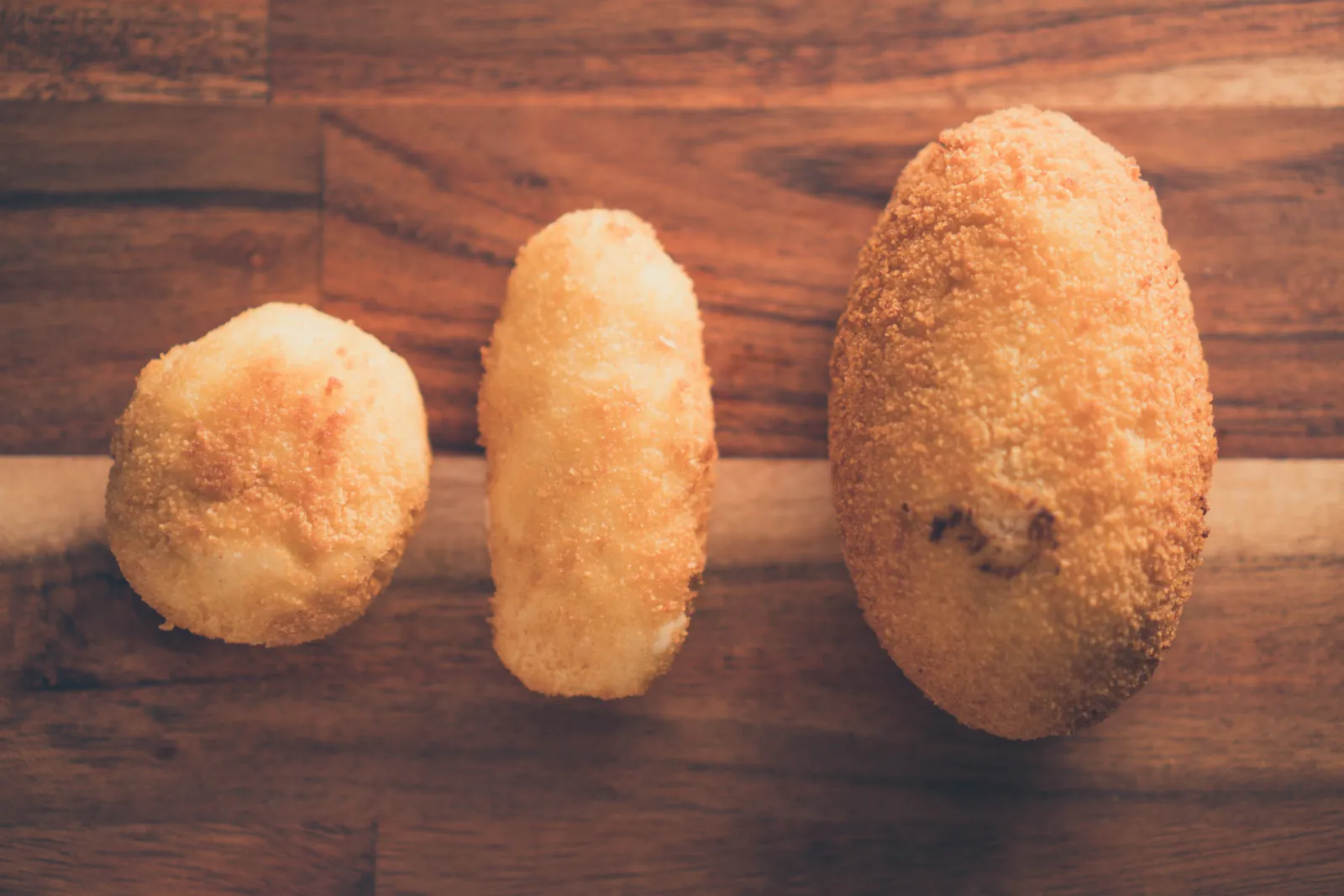
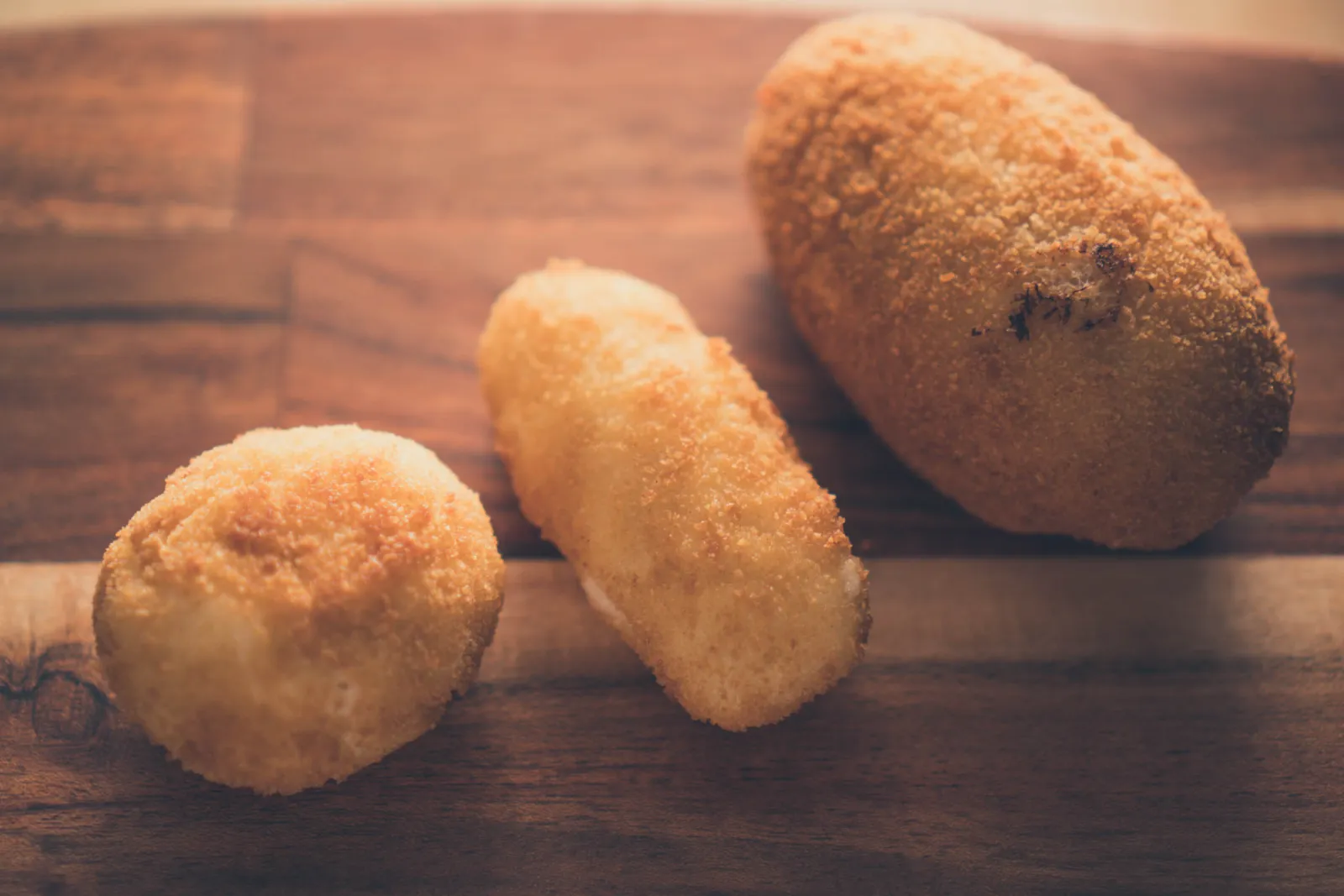
You can make croquetas of any size or form, but the most traditional ones are either oval or spheres. That been said, rectangular croquetas are common.
Sample size/forms for croquetas
What is key is that the croqueta is small enough so that it can get evenly warm while frying it, and not get cold in the interior. As always remember that uniformity is essential while cooking, so try to make all of them of the same size. You can help yourself with a scale, spoon or an ice scoop.
The dough needs to be cold before you start forming the croquetas. If you are in a rush or your bechamel is quite thin, you can put it in the freezer to gain some consistency.
Bread
There are many ways of covering your croquetas with bread crumbs. The most traditional one is to cover the mass first in flour, then egg and finally the breadcrumbs. If the mass is solid enough, some people don’t put them in flour as it is not strictly necessary, but it helps the egg to stick and have a more uniform coating of the breadcrumbs.
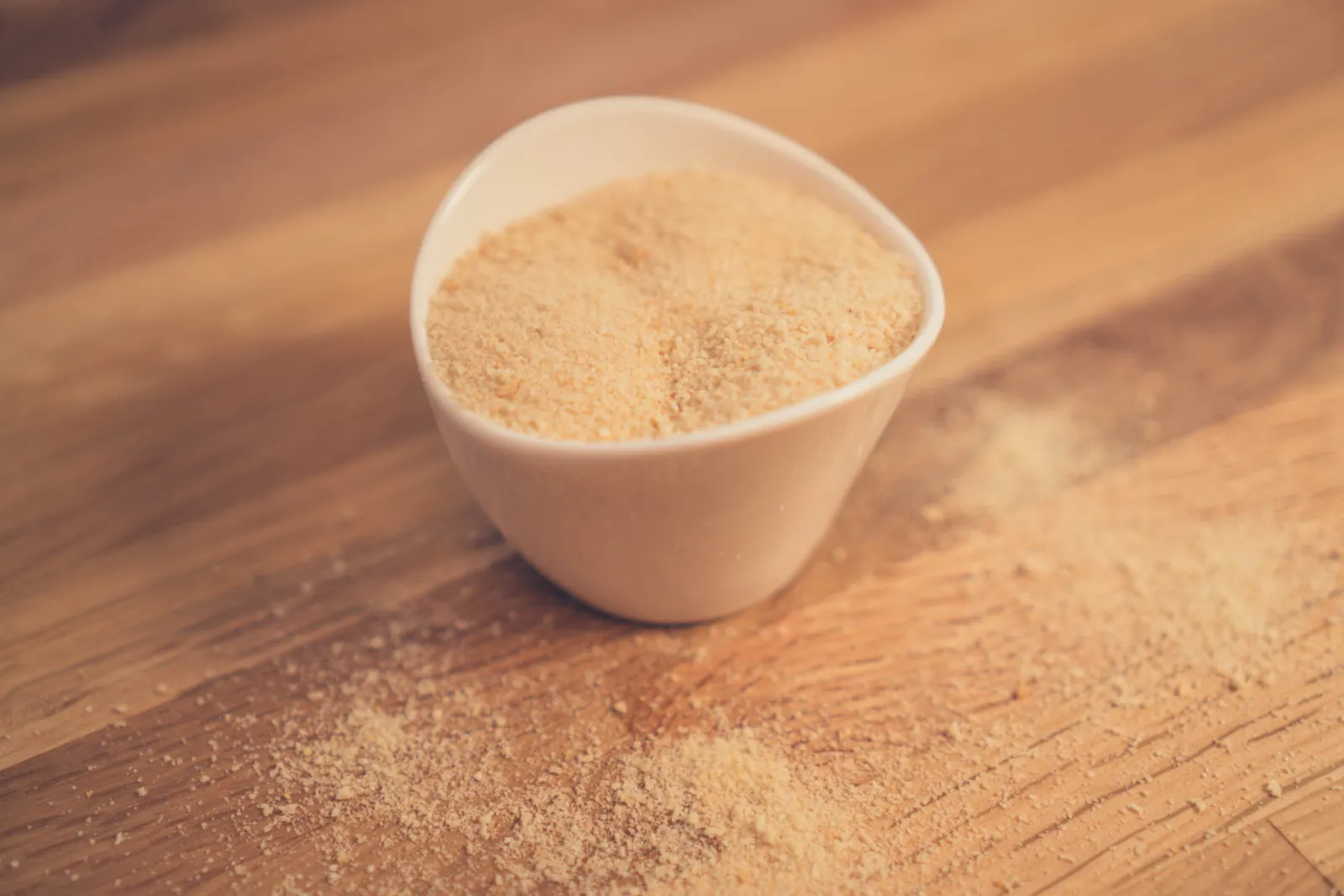
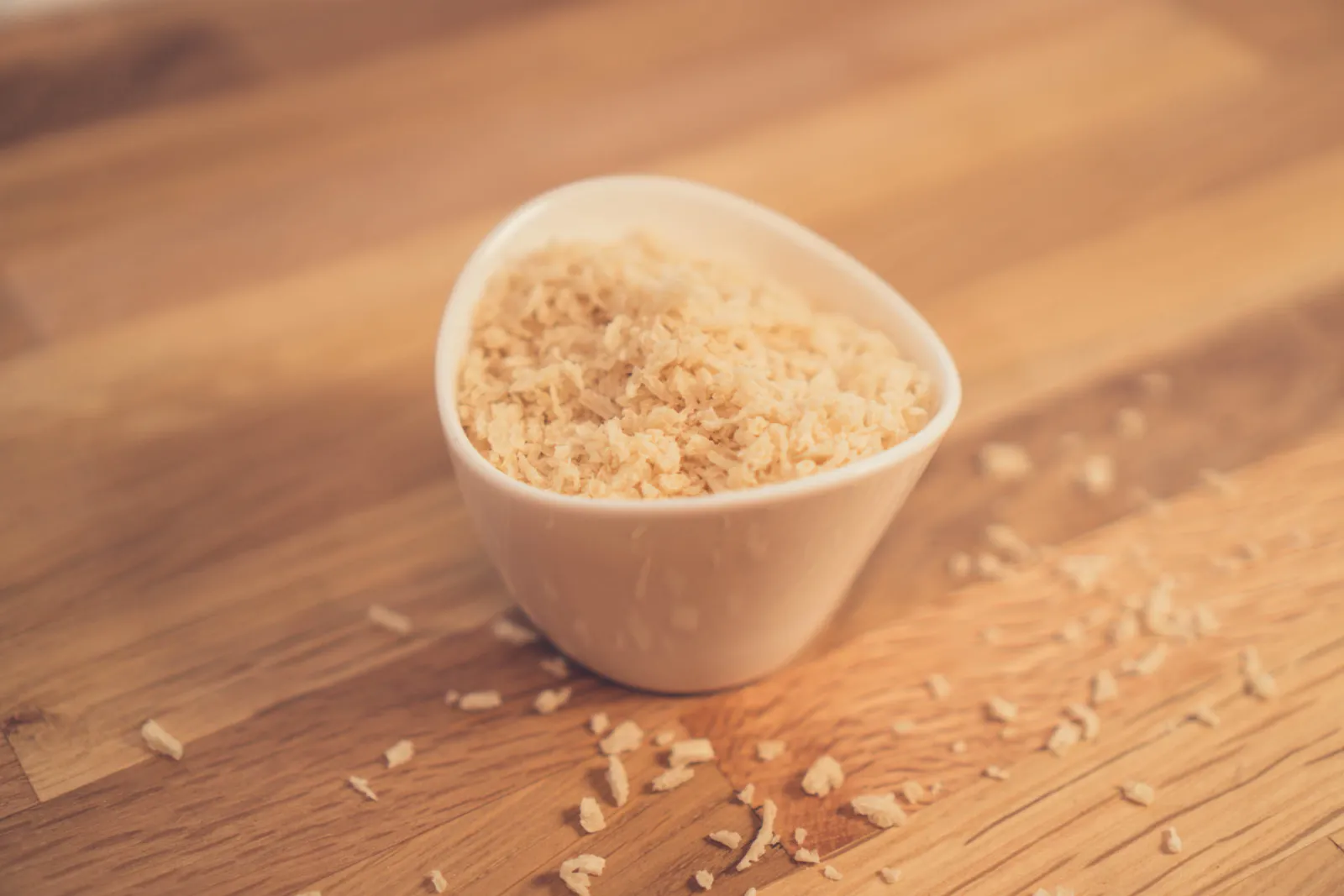
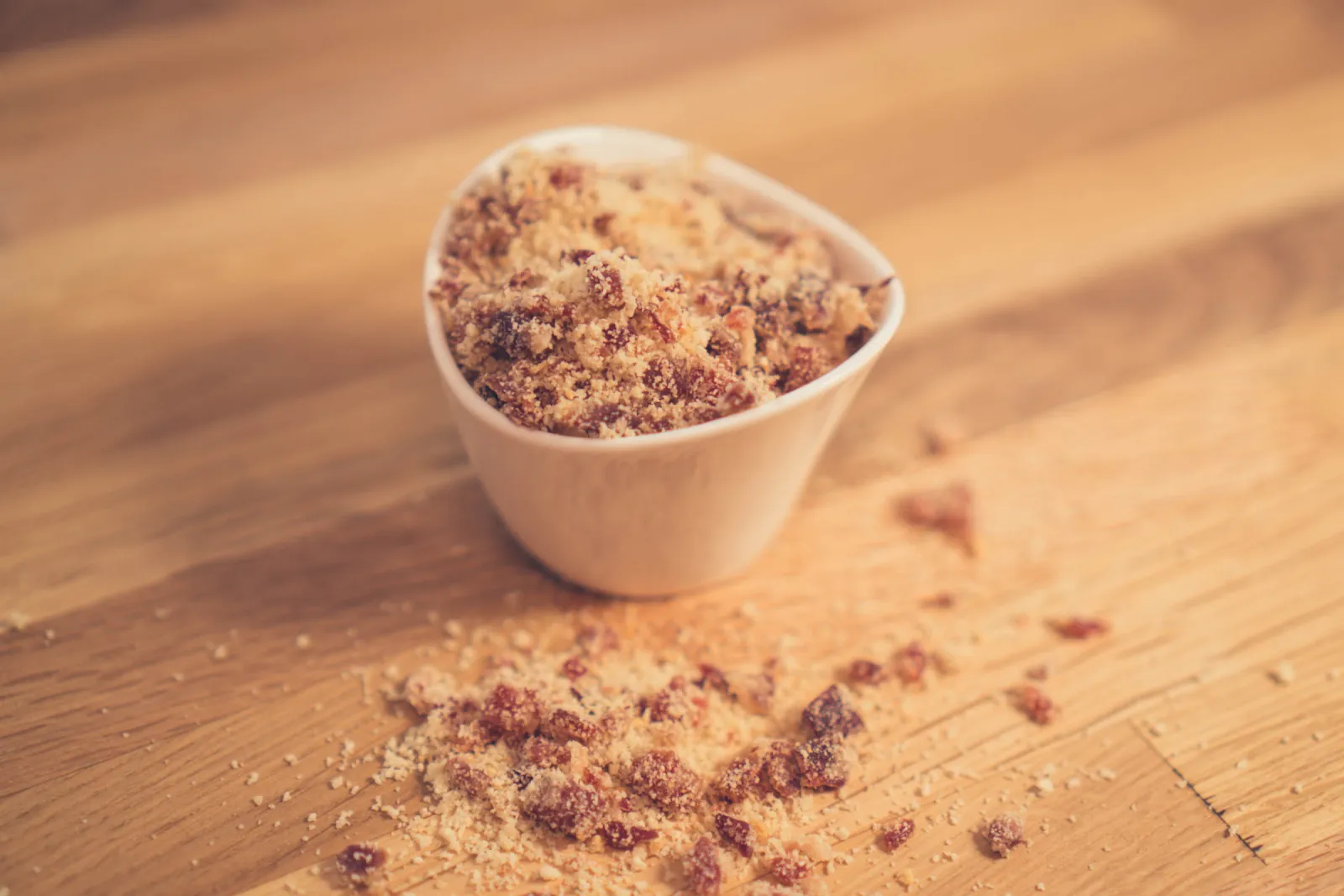
About what breadcrumbs to use, it is actually subject to the flavour you are looking for. The most traditional way uses plain breadcrumbs, but you could use panko instead. If you want to go experimental, add some small nuts/ham/seeds/herbs to the breadcrumbs and the croqueta will have an interesting texture on the outside. Keep in mind that, the only limitation is that whatever ingredients you use, they need to be quite dry, so they survive and don’t burn much while getting fried.
Breadcrumbs, Panko and Breadcrumbs with ham dices
Frying
Frying is an art, but especially when you are cooking croquetas. The dough/bechamel is already cooked, and you could eat it as it is, so the amount of time the croqueta is going to be in the oil needs to be enough to have a crispy and golden exterior and a warm enough interior that feels right in your mouth.
About the temperature of the oil, if it is too cold, the bread crumbs won’t get crispy and the croqueta will look oily, conversely, if the oil is too hot, you might remove the croqueta once is golden and crispy, but the interior might still be cold.
Precision is essential. If you leave the croquetas for too long, the exterior might get burn, or the interior will reach such a high temperature, that it will start releasing vapour and once the surface can’t hold the pressure, the croqueta will crack and get opened.
Exploded croqueta because of incorrect oil temperature
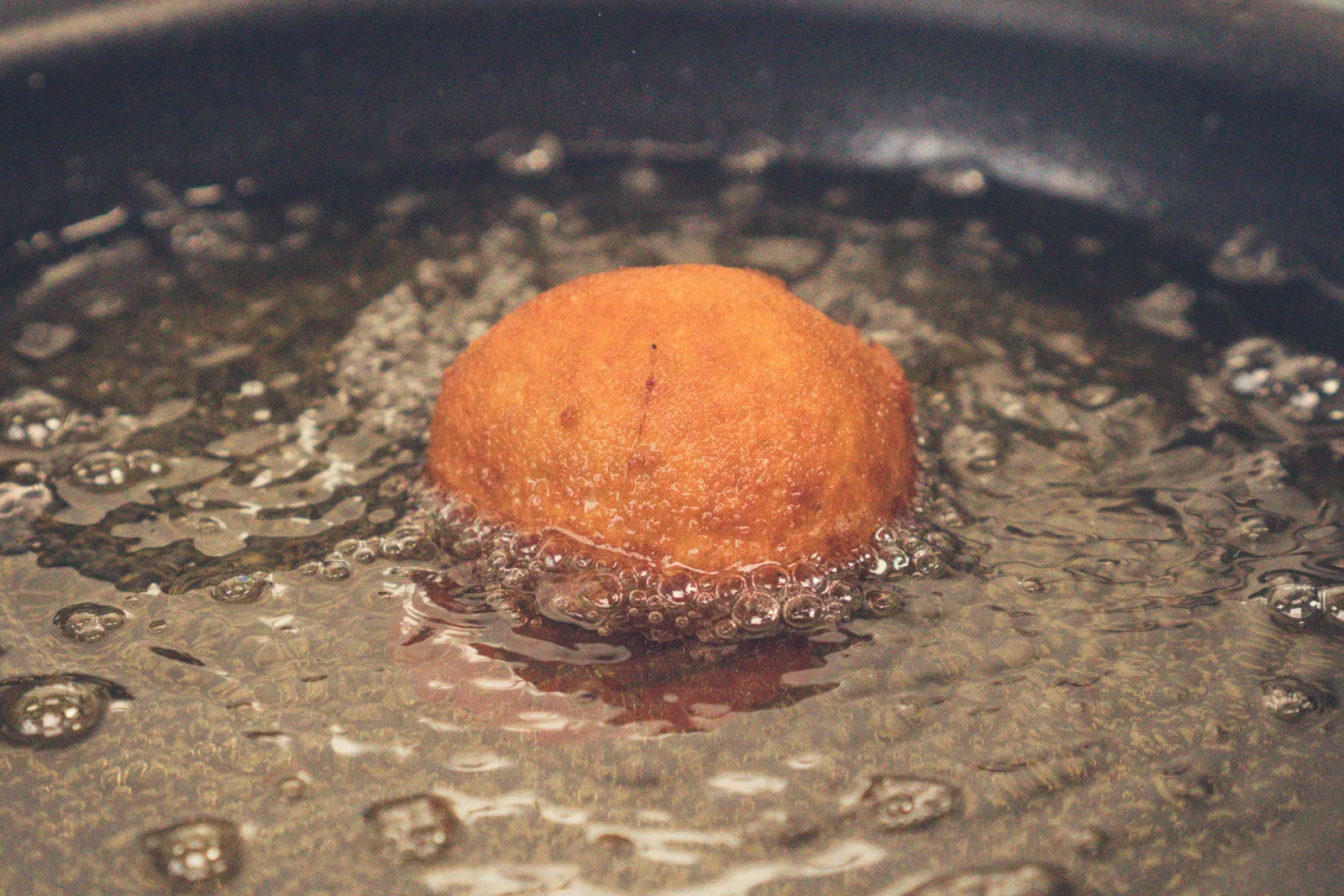
Something crucial is that you fry your croquetas with enough oil, so they get submerged and cooked evenly all around allowing to the exterior to be uniformly resistant to the interior pressure as well as look good.
Some people try to fry them in a pan, which tends to make croquetas explode. The reason behind is that it gets cooked on one side first, so 50% of the croqueta will not be as strong as the other, which means the pressure will break through the least opposing wall, leading to a broken croqueta and a mess.
As the oil soaks the non-fried part of the croqueta, it becomes weaker, and it breaks.
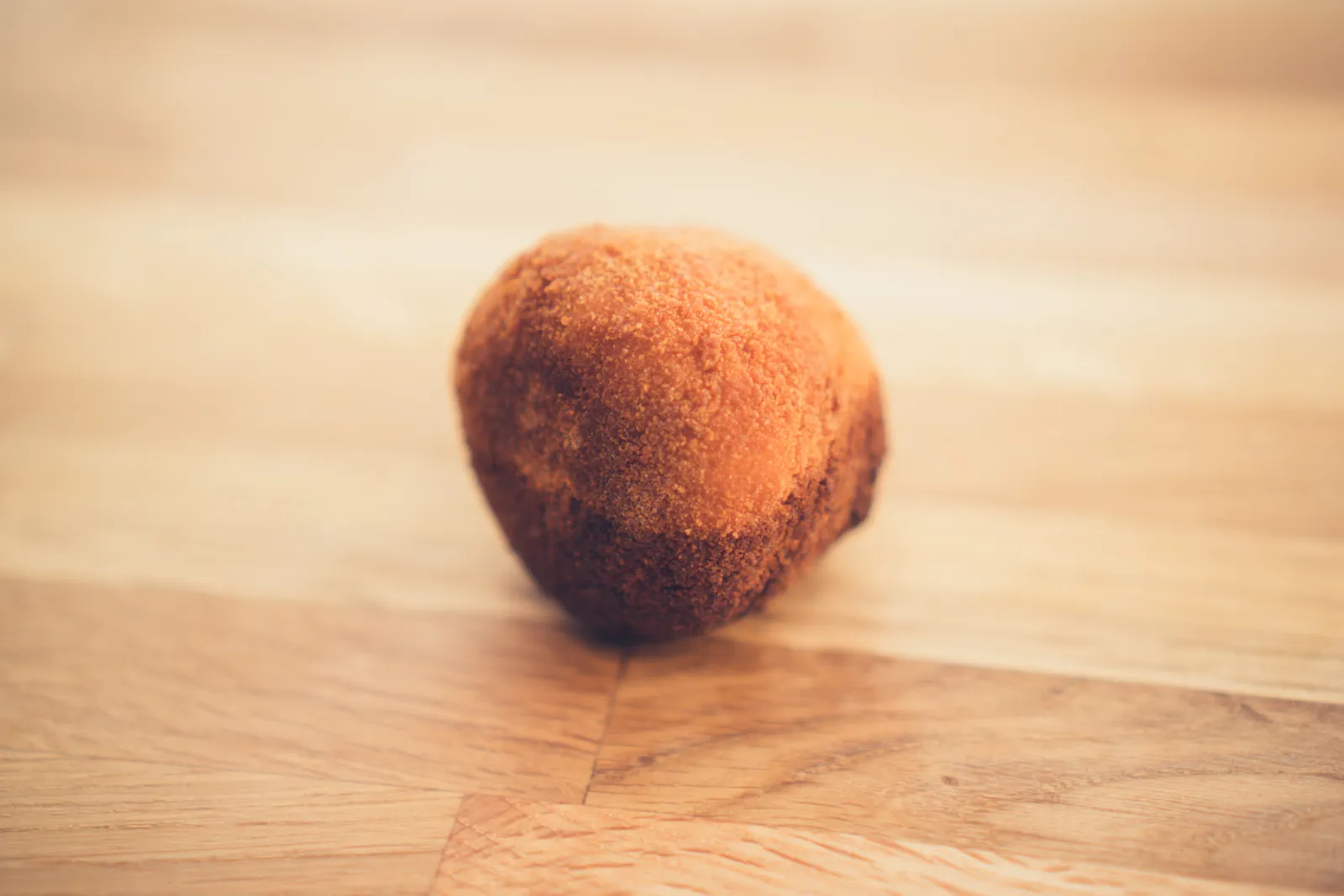
If you are lucky and your croqueta doesn’t break while frying it in a pan, you will end up with a croqueta with two different colours, which is not appealing as it could be.
Frying a croqueta without enough oil and it's result.
Summary
You can make the bechamel of any possible flavour, just make sure it is solid enough so you can form the croqueta.
Make the croquetas small enough so it can get evenly warm while frying them.
If you don’t have a fryer, use a small but high pan so the oil is deep enough and you don't waste much of it.
Make sure the oil is at least 190-200°C before putting the croquetas on it, and don’t add too many at a time, so the oil doesn’t get cold.
Step by Step
Warm and infuse milk
1.The first step for creating a bechamel is to warm your milk. It will be easier to incorporate into the flour if you do so. While heating it, add any extra ingredient you want to use to infuse your milk.
Warm and infuse the butter
2.Next, put the butter in a pan on a low heat, so it melts. Once it is melt, add any ingredient of the bechamel that either requires cooking or can add flavour the butter.
Add ingredients to the butter, so they flavour it. The sweet flavour of the onion makes a great base for your croquetas.
Add flour
3.Once the butter is nice and hot, add the flour and cook your roux at low heat until is golden. Make sure to incorporate all the flour.
Add the milk
4.Once ready, start pouring the milk in several batches. After each pour, make sure all the milk is incorporated before adding more.
Add the milk in batches and do not add any more milk until the previous batch is incorporated.
Boil until it thickens
5.After adding all the milk, you should end up with a nice bubbly bechamel. As the bechamel boils, it becomes thicker, so keep in mind what kind of texture you are looking for. Always use a low heat as at this stage is easy for the bechamel to get stick to the bottom of the pan.
We are looking for a creamy bubbly bechamel
Let the bechamel cool
6.Put it on a recipient and let it cool for at least 4 hours at room temperature or 2 in the fridge. If you cover the bechamel with some film, you'll avoid the top go dry.
If the container is big, it'll allow the bechamel to cool faster.
Form the croquetas
7.Once the bechamel is cold, you can start forming your croquetas. I recommend you to create an assembly line where the first step is getting a portion of the bechamel, form it, cover it with flour, soak it in egg and finally cover it with breadcrumbs.
Flour, egg and finally breadcrumbs.
Once you have formed all your croquetas, you can keep them in the fridge until needed, or use the freezer if you want to have them in the future. Individually wrapping them will make your life easier if you want to freeze them.
Frying your croquetas
8.The only remaining step is frying your croquetas. Put a deep pan with enough oil so the croqueta can float on it, and make sure it reaches 190°C. Submerge the croquetas in the oil one by one. Never add too many as the oil temperature will drop drastically.
Remember to use enough oil, so the croqueta gets submerged.
After no more than a minute, the croqueta should be golden and crispy, remove it from the oil and put it on a plate with some paper, so we remove as much oil as possible from the outside of croqueta.
And that's everything! Remember to enjoy your croquetas while they are hot.
Conclusion
Croquetas are the perfect appetiser for your party. Easy to prepare in advance, and fry just before you serve them. People will devour them regardless of what you put in them.
The recipe box includes several recipes which I like, but do not forget to experiment and try to make croquetas of your favourite food. It is easy, and everybody loves them.